How I got here
I never wanted to be a therapist.
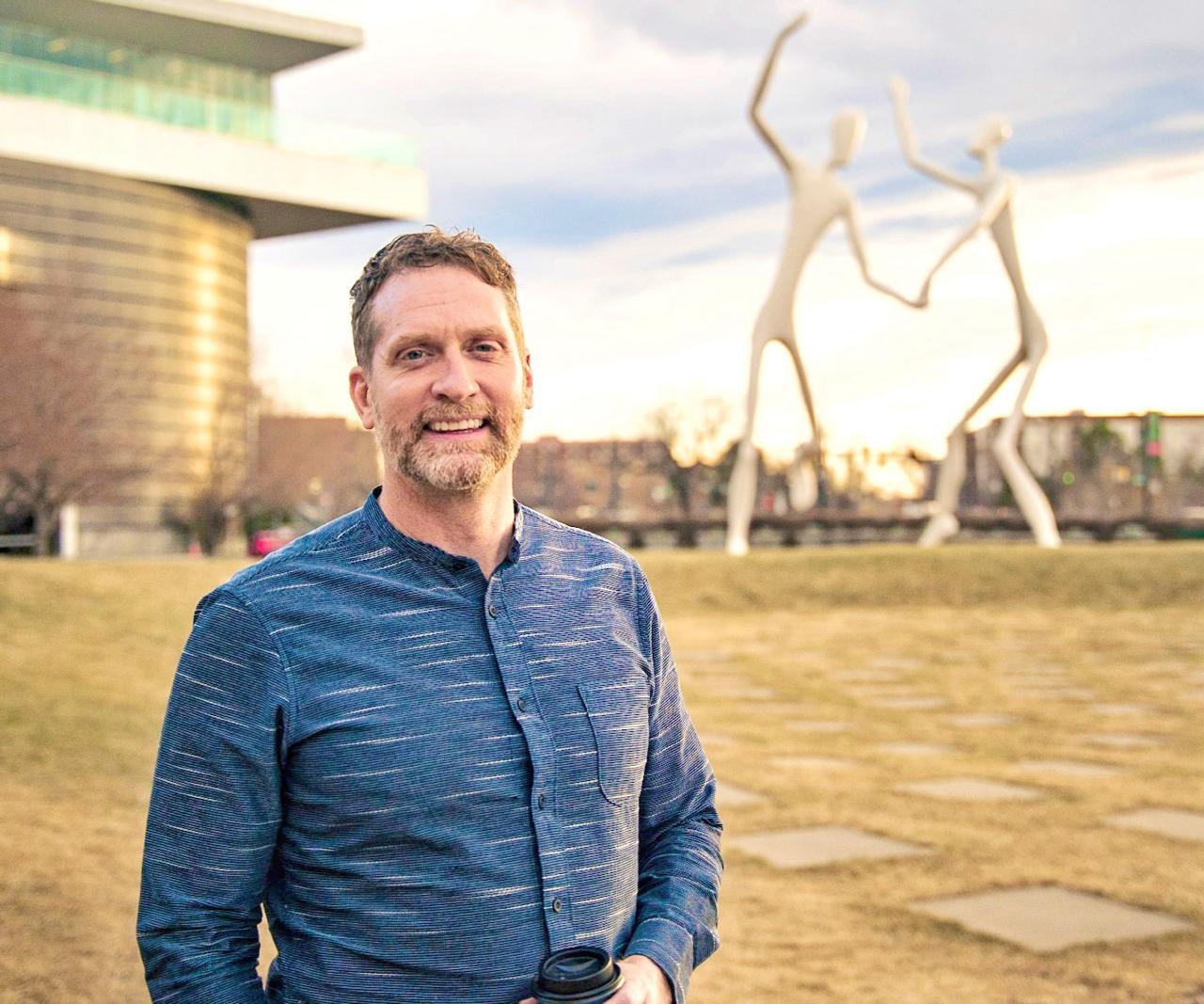
In 2012, I was in my twenties, working as a bellman supervisor at a hotel in San Diego, proudly putting my shiny new business management degree to work by telling other people how to do their jobs better. I was well on my way to accomplishing my childhood dream of becoming… rich.
At least, that was the plan.
From the outside, my life looked perfectly fine. Inside, I felt directionless, restless, disappointed. I had this nagging feeling that I needed to do something else — I just had no idea what it was.
One night, while sitting on the front steps of the house my folks and I had built in Alaska, I offered what I can only describe as a prayer… or maybe a holy complaint. Whether it was directed toward God, nature, the universe, or simply the deepest part of myself, I still don’t know. I just remember saying:
“I feel like I can do anything I put my mind to, but I don’t know what to do. I need help.”
The next morning, I woke up with a thought that had never crossed my mind before.
“Why don’t you become a therapist?”
To this day, I don’t know where that thought came from. I hadn’t ever even seen a therapist. It wasn’t on some hidden list of possibilities. It simply arrived. And now, you’re reading this because of it.
I returned to San Diego and followed that unexpected calling. I enrolled in psychology courses and began volunteering on a substance use unit at Sharp Mesa Vista Hospital. Something felt different. I loved learning about psychology, but what stayed with me were the conversations I had with people rebuilding their lives after hitting rock bottom. That’s where I discovered something that still guides my work today:
People don’t heal because someone has the perfect answer. They heal because they have a relationship where they can be honest.
Those experiences eventually took me across the country to earn my Master of Social Work at Smith College. My education gave me a strong clinical foundation and a deeper understanding of human behavior. But — shocker — the lesson that most shaped me as a therapist never came from a textbook.
It came through my own therapist.
Anton Kris. Or, Yoda, as I called him. At 84, Yoda suggested that I consider transferring to another therapist. He wasn’t sure he’d live long enough for us to finish the work we had begun together.
I sat with his recommendation for a while, but something didn’t feel right. So I called him. I told him, “Even if our work is brief, I’d rather keep working with you.” There was a pause. Then he said something that still makes me smile...
“We did fall in love, didn’t we?”
My jaw hit the floor. I knew he wasn’t talking about romance but that he was acknowledging something much simpler — that our relationship mattered to him.
That moment changed me.
Yoda showed me that therapy isn’t just about insight or technique. It’s about the courage to be genuine. His honesty invited my honesty. His vulnerability gave me permission to risk my own.
Today, I strive to create a connection with my clients that is grounded in authenticity, curiosity, and the belief that meaningful change begins when we feel safe enough to tell the truth.
“Despite our best planning we really don’t know our final destination in life. It is more than a trip, it is a journey. If I could do things over I would embrace the uncertainty, realize it is part of our life process and take more time to enjoy the times and situations I found myself in”
Training & Education
- Clinical training
Internal Family Systems (IFS), trained
EMDR, certified
Brainspotting, trained — Certification in progress
Ketamine Assisted Psychotherapy (KAP)
Experienced wilderness guide
- Education
MSW, Smith College — 2016
BS Business Management, UNLV
- Upcoming
Brainspotting & Narrative Therapy
- Licensure
LCSW · Colorado
LICSW · Massachusetts
LCSW · New York